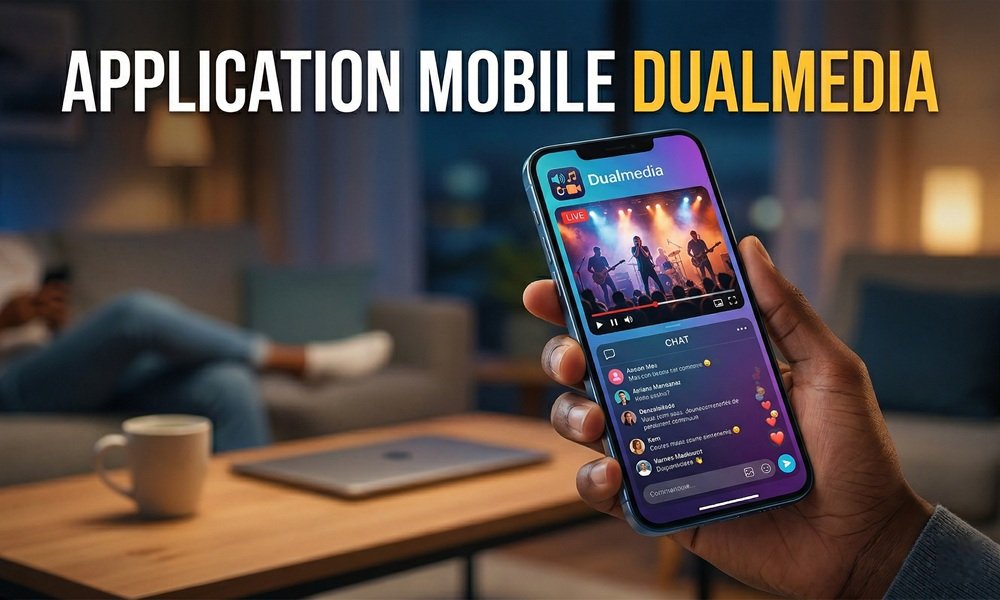

The digital world continues to evolve at an incredible speed, and businesses are constantly searching for innovative ways to improve customer engagement. One emerging concept gaining attention is application mobile dualmedia. This technology combines multiple forms of digital interaction into a single mobile environment, helping brands create stronger connections with users.
As smartphones become central to everyday life, people expect mobile applications to deliver seamless experiences across entertainment, communication, shopping, and productivity. Application mobile dualmedia answers this demand by integrating multimedia features, smart functionality, and advanced interaction models. Businesses, startups, and developers now see this model as an effective solution for modern digital transformation.
Understanding Application Mobile DualMedia
Application mobile dualmedia refers to a mobile application system that merges two or more digital media functions within a unified platform. These functions commonly include video, audio, interactive content, AI tools, cloud synchronization, and social sharing capabilities. Instead of relying on separate apps, users can access multiple experiences from one interface.
This concept is valuable because mobile users increasingly prefer convenience. Rather than switching between different platforms, they want an all-in-one solution that simplifies digital activity. Application mobile dualmedia improves efficiency while also increasing user retention, since customers spend more time inside a single ecosystem.
Modern businesses recognize that customer attention is limited. By offering multiple services in one mobile application, companies can reduce friction and improve overall engagement. This strategy also opens new monetization opportunities through subscriptions, advertising, premium features, and content partnerships.
How Application Mobile DualMedia Works
The foundation of application mobile dualmedia is integration. Developers build a system where various technologies communicate smoothly through APIs, cloud services, databases, and responsive design frameworks. This creates a unified user experience while maintaining performance and stability.
A user might open a dualmedia application to watch educational videos, listen to podcasts, upload media files, communicate with other users, and receive AI recommendations. All these actions happen within one ecosystem, reducing user frustration and encouraging repeat visits.
Cloud architecture often powers these apps. This allows content synchronization across devices while supporting real-time updates. Whether users switch from phone to tablet or desktop, their data remains accessible and updated.
Artificial intelligence adds another layer of value. AI can analyze behavior, recommend personalized content, automate workflows, and improve engagement. These capabilities make application mobile dualmedia smarter than traditional mobile systems.
Key Features of Application Mobile DualMedia
A major strength of application mobile dualmedia is multimedia integration. Users can access text, video, audio, live streaming, and interactive content within a single environment. This creates a richer experience compared to traditional single-purpose apps.
Cross-platform functionality is another essential feature. These applications often support both iOS and Android devices, ensuring accessibility for a larger audience. Businesses benefit by reaching customers regardless of operating system preferences.
AI-powered personalization significantly enhances usability. Machine learning algorithms study user behavior and deliver tailored recommendations. This increases engagement while improving customer satisfaction.
Real-time communication tools are often integrated as well. Chat systems, notifications, live support, and community forums encourage user interaction and strengthen platform loyalty.
Security remains a high priority. Encryption, secure authentication, cloud backups, and privacy settings protect user data while building trust. Since users increasingly value digital privacy, this feature is essential.
Monetization tools are another important advantage. Subscription models, in-app purchases, advertising placements, affiliate partnerships, and premium memberships allow businesses to generate sustainable revenue streams.
Benefits of Application Mobile DualMedia for Businesses
Businesses adopting application mobile dualmedia can significantly improve customer retention. By providing multiple services in one place, brands create an ecosystem users rely on daily.
Customer engagement naturally increases because users spend more time exploring diverse content and features. Longer session durations often translate into better brand recognition and higher conversion rates.
Cost efficiency is another benefit. Instead of building multiple separate apps, businesses can invest in one scalable system. This reduces maintenance complexity while simplifying updates and feature deployment.
Brand identity also becomes stronger. A multifunctional mobile app positions a business as innovative, customer-focused, and technologically advanced.
Data collection becomes more valuable as well. Since users interact with multiple services in one application, businesses gather deeper behavioral insights. These analytics support smarter marketing decisions and improved personalization strategies.
Why Startups Prefer Application Mobile DualMedia
Startups often face budget constraints and limited development resources. Application mobile dualmedia offers an efficient solution by combining multiple business functions into one scalable platform.
Instead of launching separate apps for video, messaging, ecommerce, and analytics, startups can consolidate everything under one ecosystem. This reduces operational costs while accelerating market entry.
Investor appeal also improves. Startups presenting a comprehensive dualmedia platform often appear more scalable and innovative. Investors are attracted to products with multiple monetization opportunities and long-term growth potential.
Customer acquisition becomes easier because users appreciate convenience. A platform solving several needs at once naturally attracts broader audiences.
Flexibility is another advantage. Startups can begin with core features and gradually expand functionality as demand grows.
Development Process of Application Mobile DualMedia
The first stage is planning and market research. Developers identify audience needs, analyze competitors, and define project goals. Clear strategy reduces wasted resources during development.
UI and UX design come next. Since these applications contain multiple services, intuitive navigation is essential. Designers focus on simplicity, consistency, and accessibility.
Technology stack selection is critical. Developers choose programming languages, frameworks, databases, APIs, and cloud services that support scalability and security.
Core development begins after architecture planning. Teams integrate features such as multimedia support, payment systems, analytics, authentication, and AI modules.
Testing ensures performance quality. Developers evaluate speed, security, compatibility, and bug stability across devices.
Deployment follows successful testing. Applications are submitted to app stores and launched to users.
Maintenance remains ongoing. Updates, security patches, and feature improvements keep the application competitive and relevant.
Cost Factors of Application Mobile DualMedia
Development cost varies depending on project complexity. A simple application with limited multimedia features costs significantly less than a large-scale platform with AI integration and cloud synchronization.
Design quality impacts pricing. Custom interfaces require more time and expertise than template-based layouts.
Backend infrastructure is another major expense. Cloud hosting, database management, APIs, and storage solutions all influence total budget.
Security implementation adds cost but should never be ignored. Authentication systems, encryption, compliance measures, and backups protect both businesses and users.
Maintenance creates recurring expenses. Ongoing updates, server costs, customer support, and analytics monitoring should be included in budget planning.
Businesses should view these costs as long-term investments rather than short-term expenses.
Trends Shaping Application Mobile DualMedia in 2026
Artificial intelligence continues transforming mobile experiences. Personalized recommendations, predictive analytics, automated support, and smart workflows are now expected features.
Augmented reality is becoming increasingly relevant. Businesses integrate AR for shopping previews, educational experiences, gaming, and virtual collaboration.
Cloud-native architecture remains dominant. Users expect instant synchronization and seamless multi-device experiences.
Voice technology is expanding rapidly. Many applications now support voice commands, audio search, and conversational interfaces.
Cybersecurity standards are becoming stricter. Strong privacy controls and transparent data policies influence user trust and platform adoption.
Hyper-personalization is another major trend. Users increasingly expect content tailored specifically to their preferences and habits.
Challenges of Application Mobile DualMedia
Technical complexity is a common challenge. Integrating multiple media systems into one stable platform requires experienced developers and careful architecture planning.
Performance optimization can also be difficult. Large multimedia applications risk slower load times if not properly optimized.
Security concerns remain important. Applications managing multiple user activities naturally handle larger volumes of sensitive data.
Development costs may be high initially, especially for advanced AI-powered platforms.
Market competition is intense. Businesses must differentiate themselves through superior user experience, innovation, and consistent updates.
User onboarding is another challenge. Multifunctional platforms can overwhelm new users if navigation is poorly designed.
Best Practices for Building a Successful Application Mobile DualMedia
User experience should always remain central. Clean interfaces, intuitive navigation, and minimal friction improve satisfaction and retention.
Performance optimization is essential. Developers should compress media, reduce unnecessary requests, and use scalable infrastructure.
Security must be prioritized from the beginning. Encryption, authentication, and compliance frameworks should never be treated as optional extras.
Analytics integration supports long-term improvement. Tracking behavior reveals which features users love and which areas need refinement.
Frequent updates maintain relevance. User expectations change rapidly, so businesses must continuously evolve.
Community engagement can also strengthen loyalty. Forums, chat tools, and feedback systems help users feel connected to the platform.
Future of Application Mobile DualMedia
The future of application mobile dualmedia looks extremely promising. As mobile technology becomes more integrated into daily life, multifunctional platforms will become increasingly common.
Businesses will continue consolidating services to simplify digital experiences. Consumers prefer ecosystems that reduce app clutter and centralize functionality.
AI will make these applications even smarter. Future platforms may predict needs before users explicitly request services.
Wearable devices and IoT integration may further expand possibilities. Smartwatches, connected home systems, and automotive interfaces could all connect with dualmedia ecosystems.
Businesses adopting this model early will likely gain significant competitive advantages.
Conclusion
Application mobile dualmedia represents a powerful evolution in mobile technology. By combining multimedia functions, AI capabilities, and cross-platform accessibility, it offers businesses an efficient way to improve engagement and create stronger customer relationships.
For startups, enterprises, developers, and digital creators, this model provides flexibility, scalability, and monetization potential. As user expectations continue evolving, multifunctional ecosystems will likely dominate the mobile landscape.
Organizations investing in application mobile dualmedia today are positioning themselves for future growth in an increasingly connected digital economy.
FAQs
What is application mobile dualmedia?
Application mobile dualmedia is a mobile platform that integrates multiple digital media functions such as video, audio, AI tools, messaging, and interactive content within one application.
Why is application mobile dualmedia important?
It improves convenience, increases user engagement, reduces app switching, and creates stronger monetization opportunities for businesses.
Is application mobile dualmedia suitable for startups?
Yes, startups benefit from reduced operational complexity, faster market entry, and scalable architecture.
How much does application mobile dualmedia development cost?
Costs vary depending on complexity, design, AI features, backend infrastructure, and maintenance requirements.
Is application mobile dualmedia secure?
Yes, when built correctly with encryption, authentication, secure APIs, and privacy protections.
What industries benefit from application mobile dualmedia?
Media, education, ecommerce, healthcare, finance, entertainment, and enterprise software industries can all benefit.
Does application mobile dualmedia support both Android and iOS?
Most modern implementations support cross-platform functionality for wider audience reach.
What is the future of application mobile dualmedia?
Its future includes deeper AI integration, AR experiences, cloud-native ecosystems, and IoT connectivity.
you may also read
Kársperski Complete Cybersecurity Guide Features Benefits Pricing Review and Protection 2026